Up next in 10



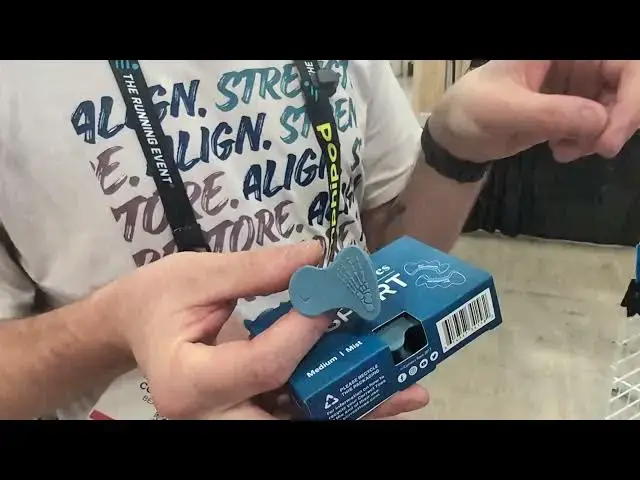
Got bunions? CorrectToes is here to help! Chase Coffey explains how to reverse the consequences of years spent cramming your feet into narrow, pointy shoes.
Show More Show Less View Video Transcript
0:00
Hi, this is Road Trail Run at the TR
0:02
2025 show. Uh I'm at the Correct Toes
0:05
booth with Chase Coffee who's going to
0:07
talk about Correct Toes and what they
0:09
are, why you might want them.
0:10
Yeah. Uh Correct Toes, we are a uh toe
0:13
spacing brand. Um been around about 25
0:17
26 years now.
0:18
And the whole idea of toe spacers are to
0:20
help strengthen and rehabilitate the
0:22
foot back to its natural positions,
0:23
which is why you set the tips of the
0:25
toes, not the ball of the foot. Um
0:27
really what our product is designed to
0:29
do is is tackle issues like bunions,
0:31
hammer toes, nuromomas, neuropathies, um
0:34
issues that are generally caused by foot
0:36
deformities, tight shoes, things like
0:38
that. Um we launched a new product maybe
0:42
6 months ago or so specifically for run
0:44
especially in outdoor called the
0:46
correctto sport. That's this model here.
0:48
Um, what we really did is we took our
0:50
original product, correct Toes, and made
0:52
a few modifications to make it more
0:54
appealing for a wider base of athletes.
0:57
We have filled in the shims to make the
0:59
big toe a little bit more um already
1:02
filled in a little larger so it creates
1:04
more space between the first and second
1:05
toe and we've shrunk down the pinky toe
1:08
to make it uh fit a wider range of feet.
1:11
Um, so that's one big modification
1:13
change. Um, the other thing we did is
1:14
made it about 20% softer and more
1:16
flexible. That just makes a better step
1:17
in kind of casual feel. Also increases
1:20
durability. You have less stress points
1:22
in the product when you're running and
1:23
being active in it because it is more
1:25
soft and more malleable. Um the other
1:27
option we did is we made it left and
1:29
right specific and that is to allow the
1:31
big toe to lift alongside the product
1:33
when you're running or walking in the
1:34
product uh without any sort of lifting
1:37
of the product or bunching up the
1:38
product. So a little bit better fit
1:39
performance to it uh for that athletic
1:41
use. That's really the the fun new thing
1:44
with KTOS. Um, we also introduced a new
1:47
product called Kreto's stable toe.
1:51
Grab that one.
1:52
Sorry about that.
1:53
And stable toe is our single toe spacer
1:55
really designed for uh specifically
1:58
bunions and also arch support
2:00
and and
2:02
can you explain what bunions are?
2:04
Yeah, so um bunions are foot deformity
2:07
uh basically it's a dislocation of the
2:08
first digit. Uh so over time with
2:11
pressure um the the big toe will begin
2:14
to curve inward and you'll start to
2:16
notice a bump on the outside of your
2:17
your first digit. Um that is basically
2:19
your your toe not running on on the
2:21
right railroad track anymore. So what we
2:23
try to do is is shift that big toe back
2:25
straight. Allow for flexibility within
2:27
that big toe. The bump will never go
2:29
away, but you will regain a lot of
2:31
dexterity in your big toe, strengthen
2:32
your foot, um and allow that big toe to
2:35
to kind of straighten up up up and down.
2:37
Uh so we're we're just kind of rehabbing
2:39
the foot
2:40
and and generally that this is an issue
2:42
caused uh in part by a lifetime of
2:45
wearing shoes which squish your toes
2:47
into a small space.
2:48
If you look at you know retired
2:50
basketball athletes and football
2:51
athletes, there's tons of cases of them
2:52
out there with pretty mangled feet from
2:54
wearing cleats all their life, wearing
2:56
basketball shoes all their life. Same
2:57
with a lot of pro runners, especially
2:58
sprinters wearing super tight sprint
3:00
shoes. Um, we're trying to prevent those
3:03
things ahead of time. So, those
3:04
athletes, don't use your athletic
3:06
basketball shoes or your track spikes
3:07
for those purposes. When you're done,
3:09
wear correct toes or products like this
3:11
to space those feet back out and try to
3:13
reduce the damage ahead of time. Right.
3:15
So, more of a recovery based product.
3:17
They're great for reducing the injuries
3:19
ahead of time, but they're also a rehab
3:21
product for people that have those
3:22
ailments.
3:23
And how much time do I have to wear
3:25
these?
3:25
Sure. If you have a major foot deformity
3:27
like a hammer toe, mallet toe, bunions,
3:29
you'll start to feel a physical change
3:31
within two to three weeks. You won't see
3:33
a physical change for anywhere from 6
3:34
months to two years. Very similar to
3:36
braces, right? Think invisal line for
3:37
our feet. Um, yeah, that's really kind
3:41
of the timeline.
3:42
And you want to wear them as much as
3:43
possible,
3:44
as much as you can tolerate. You know,
3:46
think about it like going to the gym. If
3:47
you lift weights for the first time in 3
3:49
months, your feet are going to be sore.
3:50
This is going to introduce a little bit
3:52
more activation through your arch that
3:53
you're not used to, a little bit of
3:55
elongation to the top of the foot. It's
3:56
going to just kind of waken up some
3:58
muscles in your feet. You'll feel
3:59
fatigued and sore after about 15 to 30
4:01
minutes in the first week. Once you kind
4:03
of get over that soreness, go ahead and
4:04
start pushing that out to an hour. But
4:06
the key to our product is active use. So
4:09
doing something weight bearing whether
4:10
it's lifting weights, running, walking,
4:12
whatever it is, something where you're
4:13
on your feet with the product in place
4:15
that strengthen strengthens the muscles
4:18
to be able to pull the bones back in the
4:19
right position.
4:20
So you wouldn't recommend uh users sleep
4:22
with them.
4:22
You can there's really great blood study
4:24
or blood flow uh statistics with our
4:26
product that basically increases blood
4:27
flow to the bottom of the foot. It's
4:28
actually 5 degrees Celsius difference
4:30
between wearing ceretos at the tips of
4:31
the foot than at the ball of the foot
4:32
without ceretos on. Um so people with
4:35
planner fasciosis or chronic planner
4:36
fasciitis um it works really well for
4:39
restoring blood flow to the bottom
4:40
bottom of the planter.
4:41
Um so there is benefit to that but if
4:44
you're looking to change the structure
4:45
of your foot you need to be
4:46
weightbearing.
4:47
And how much do they cost? Where can we
4:50
buy them?
4:50
Yeah definitely. Uh the new products uh
4:52
stable toe it's a set of one left and
4:55
right specific. They're 25 and the sport
4:57
uh correct toes are $35. You can get
4:59
them at most of our traditional run
5:01
specialy retailers. Uh we're in about
5:03
400 stores across the US. Uh so you know
5:05
your fleet beats, your mom and pop run
5:07
specialies, REI and things like that.
5:09
Wonderful. Thank you so much, Chase.
#Fitness
#Health